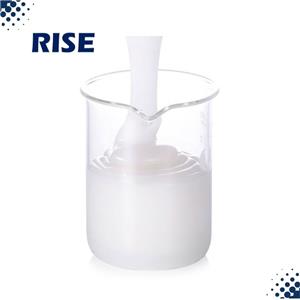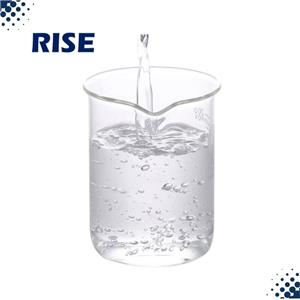
Industrial Defoamers: Why Effective Foam Control Matters in Modern Manufacturing
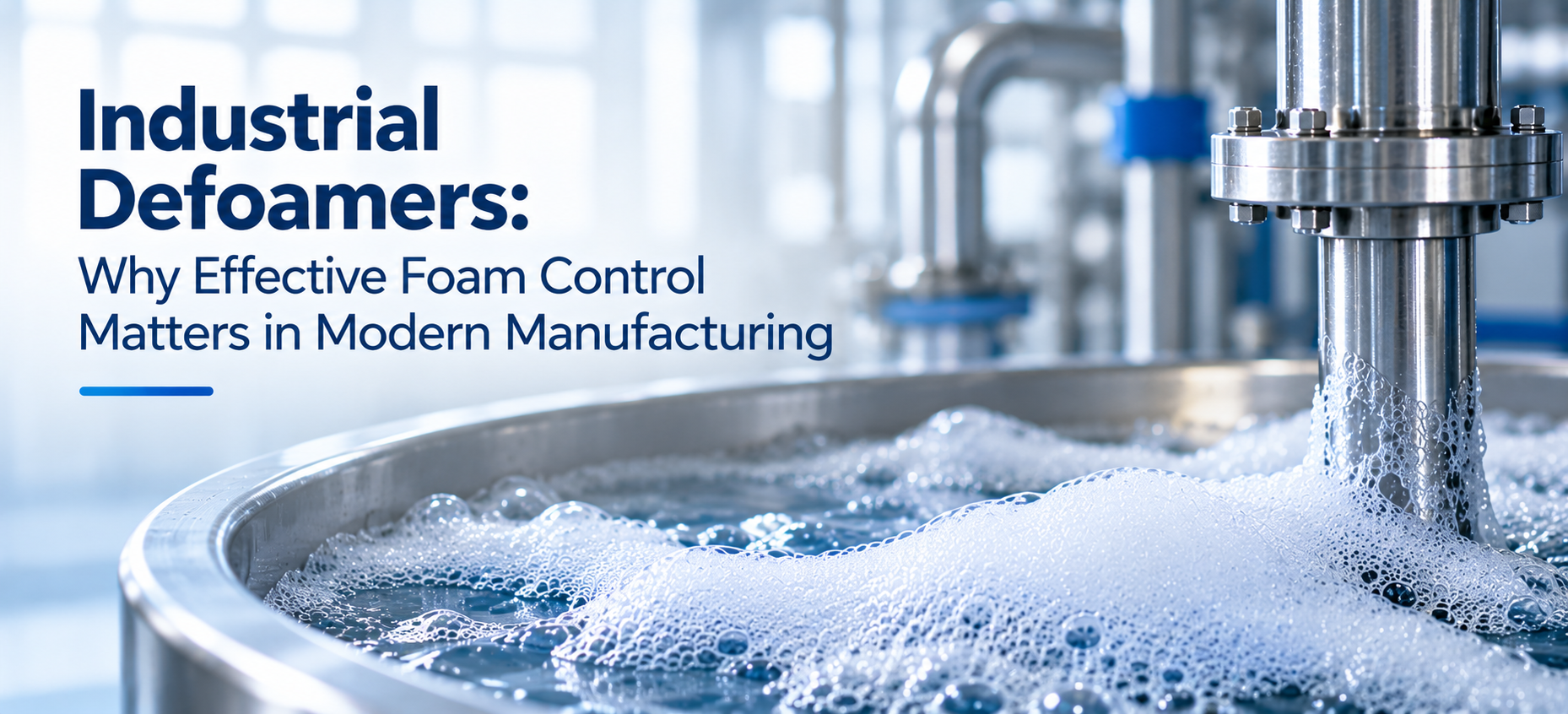
Foam may appear innocent at the very least. Yet, in large scale manufacturing, it can pose a major and costly issue. Everything from foam causing a chemical reaction in mixing tanks to being the reason for the instability in circulation of the liquid media, is something that excess foam may result in. The effects may be so subtle that even the best engineers fail to appreciate its significance until too late.
Therefore, industrial defoamers are the unsung heroes in several manufacturing setups. While industrial defoamers are primarily known for their anti-foaming capabilities, their importance goes much deeper than that. In fact, it is only through the use of a suitable defoamer that production can be kept moving consistently with only minimal breaks and highly uniform quality of end products.
How Foam Turns into a Problem in Factory Operations
We usually see the formation of foam as a result of air being introduced into the liquid while mixing, pumping, or circulation. Some kinds of industrial surfactants and other materials can actually cause the foam bubbles to last longer and not easily get rid of them. Some of the situations foam naturally dissipates while in the other ones it keeps rising and becoming a problem.
Too much foam could take up the usable space in the tanks, hinder the pumping and processing operations and also affect the ability of the processing of the goods as a whole, resulting in a lot of loss. Industrial defoamers are formulated to solve these problems in different ways - either by getting the foam to break down faster or by preventing it from being made at all.
Choosing Industrial Defoamers: What Really Matters?
Selecting industrial defoamers involves more than finding a product that makes foam disappear quickly.
A defoamer might perform well in a short laboratory test but behave differently under continuous circulation or higher operating temperatures.
Temperature: Foam control performance can change as operating temperatures vary.
pH: Acidic and alkaline systems may respond differently to certain defoamer chemistries.
Compatibility: Industrial defoamers should work with the existing formulation without causing unwanted side effects.
Long-term performance: Fast foam knockdown is useful, but lasting foam control is often just as important.
The best choice depends on the actual application. A product suitable for one manufacturing process may not deliver the same results in another. That's why testing under realistic operating conditions matters.
Industrial Defoamers in Metalworking and Cleaning Applications
The challenge is maintaining effective cleaning performance while keeping unwanted foam under control.
Industrial defoamers can be part of the solution, but selecting a compatible product is essential. Too much additive, or the wrong formulation, may create problems rather than solve them.
Sometimes, better foam control also requires adjustments to equipment or operating conditions.
How does RISE CHEMICAL provide solutions for industrial chemicals
RISE CHEMICAL is a 22-year-old business that operates in the chemical industry as well as offering manufacturing solutions.
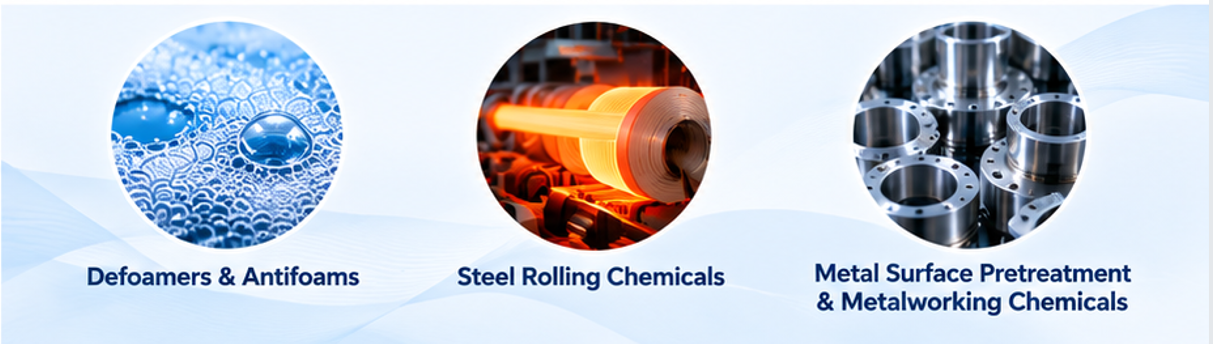
Defoamers & Antifoams - This includes chemical products that manage the undesirable foam generation that is common in many industrial processes.
Steel Rolling Chemicals - Includes the products used in the steel rolling industry.
Metal Surface Pretreatment & Metalworking Chemicals
This group consists of rust preventive products, industrial cleaning agents, and cutting fluids. This is an important first step for users who are planning to use industrial defoamers. What are the causes and times. when foam appears in a process?
What are the prevailing conditions including temperature, pH (acidity/alkalinity), and circulation speed?
These sorts of questions highlight the elements that one would need to consider when assessing different defoamer options.
Better Foam Control Starts with the Right Choice
Industrial foam control methods do not always require advanced techniques. But they usually involve a careful execution of several operations.
Manufacturers should use suitable defoamers to keep foams under control as well as ensure that processing conditions are not only foams, even with very little of these agents, when these agents are well chosen and properly applied.
No single recipe or technique will be suitable in all situations. The needs of different processes vary and testing under actual conditions is what ultimately ensures successful foam control.
Are you looking for suppliers of defoamers for industrial use or evaluating possible chemical supply agreements?
RISE CHEMICAL would be happy to hear from you as a chemical supplier, chemical manufacturer or as a potential new partner.